

Watts Pressure Regulator Manual: A Comprehensive Guide
This manual details troubleshooting, repair, and installation of Watts regulators, covering residential and commercial applications, alongside thermostatic mixing valve insights.
Watts has long been a trusted name in water quality and flow control, and their pressure regulators are vital components in countless plumbing systems. These devices are engineered to maintain consistent water pressure, protecting appliances and plumbing fixtures from damage caused by excessive force. Understanding how these regulators function is crucial for both homeowners and plumbing professionals.
This guide provides a comprehensive overview of Watts pressure regulators, covering everything from basic principles to advanced troubleshooting and repair techniques. We’ll explore the different types available, focusing on residential and commercial models, and briefly touch upon related technologies like thermostatic mixing valves. Proper installation and maintenance, as outlined within, will ensure optimal performance and longevity of your Watts regulator.
What is a Water Pressure Regulator?
A water pressure regulator, also known as a pressure reducing valve (PRV), is a vital plumbing component designed to lower incoming water pressure to a safe and usable level. Municipal water supplies often deliver water at high pressure, which can damage pipes, appliances like washing machines and dishwashers, and even cause leaks.
The regulator functions by automatically reducing higher inlet pressure to a lower, more consistent outlet pressure. This protection extends the lifespan of plumbing systems and ensures efficient water usage. Without a regulator, fluctuating or excessively high pressure can lead to costly repairs and potential water damage. Properly functioning regulators are essential for maintaining a reliable and safe water supply within a building.
Types of Watts Pressure Regulators
Watts offers a diverse range of pressure regulators tailored to different needs. Residential Pressure Regulators are commonly used in homes to protect plumbing and appliances from high municipal water pressure, ensuring consistent flow. Commercial Pressure Regulators are built for higher flow rates and more demanding applications in businesses and industrial settings, offering robust performance and durability.
Furthermore, Thermostatic Mixing Valves (TMVs), while not solely pressure regulators, play a crucial role in pressure control by blending hot and cold water to deliver a safe, consistent temperature. These are often found in healthcare and hospitality, preventing scalding. Watts’ selection caters to various system sizes and pressure requirements, providing reliable solutions for both simple and complex plumbing systems.
Residential Pressure Regulators
Watts residential pressure regulators are designed to safeguard home plumbing systems from damagingly high water pressure. These regulators reduce incoming city or well water pressure to a safe and usable level, typically around 50-60 PSI, protecting pipes, fixtures, and appliances like washing machines and dishwashers.
Common models feature durable construction and reliable performance, often incorporating a built-in pressure relief valve for added safety. Installation is relatively straightforward, typically involving connection to the main water supply line. Regular inspection is recommended to ensure optimal function and prevent potential leaks or failures, contributing to the longevity of your home’s plumbing.
Commercial Pressure Regulators
Watts commercial pressure regulators are built for demanding applications in businesses, institutions, and industrial settings. These robust regulators handle higher flow rates and wider pressure variations than residential models, ensuring consistent water pressure for critical processes and multiple fixtures. They often feature heavy-duty construction, corrosion-resistant materials, and precise pressure control capabilities.
Commercial regulators frequently incorporate features like external adjustment for easy pressure setting and monitoring, and may be suitable for use with various water sources. Proper installation and regular maintenance are crucial for reliable operation and preventing costly downtime in commercial facilities. Selecting the correct regulator size is vital for optimal performance.
Thermostatic Mixing Valves (Related to Pressure Control)
While not pressure regulators themselves, Thermostatic Mixing Valves (TMVs) work in conjunction with them to deliver safe and comfortable water temperatures. TMVs blend hot and cold water, maintaining a consistent outlet temperature regardless of fluctuations in supply pressures or temperatures. Watts TMVs are crucial in applications like healthcare, schools, and hospitality, preventing scalding hazards.
Proper water pressure is essential for TMVs to function correctly; insufficient pressure can compromise mixing accuracy. Understanding the relationship between pressure regulation and temperature control is vital for system design and troubleshooting. Regular inspection and maintenance of both the pressure regulator and TMV ensure optimal performance and safety.

Installation of a Watts Pressure Regulator
Correct installation is key for reliable performance. This section guides you through tools, step-by-step procedures, connecting supply lines, and verifying proper function.

Tools Required for Installation
Before beginning the installation process, gather all necessary tools to ensure a smooth and efficient experience. A pipe wrench, adjustable wrench, and potentially two wrenches are essential for loosening and tightening connections. You’ll also need a screwdriver – both flathead and Phillips head – to adjust screws on the regulator and potentially remove covers.
Crucially, a water pressure gauge is vital for testing and verifying the regulator’s performance post-installation, ensuring it’s delivering the correct pressure. Pipe tape (Teflon tape) is necessary for sealing threaded connections, preventing leaks. Depending on the plumbing material, a tubing cutter or hacksaw might be needed for precise pipe cuts. Finally, a bucket and towels are recommended to catch any residual water during the process, minimizing mess and potential damage.
Step-by-Step Installation Guide
First, shut off the main water supply before commencing installation – a critical safety precaution. Next, carefully remove the existing pressure regulator, noting the flow direction marked on the unit. Clean the pipe threads thoroughly before applying Teflon tape, wrapping it clockwise.
Then, hand-tighten the new Watts regulator onto the pipe, ensuring proper alignment with the water flow. Use wrenches to tighten further, but avoid over-tightening, which can damage the unit. Slowly turn the main water supply back on, checking for leaks around the connections. Finally, adjust the regulator’s adjustment screw to achieve the desired water pressure, using a pressure gauge for accurate readings.
Connecting to Water Supply Lines
Proper connection is vital for a leak-free system. Ensure the Watts regulator is installed with the correct flow direction, typically indicated by an arrow on the regulator body. Use appropriate pipe joining methods – soldering, compression fittings, or threaded connections – based on your plumbing system.
Always apply Teflon tape to threaded connections, wrapping clockwise, to create a watertight seal. When using compression fittings, tighten nuts securely, but avoid over-tightening. After connecting to both the incoming water supply and the downstream plumbing, slowly open the main water valve to check for leaks at all connection points. Address any leaks immediately before proceeding.
Testing the Installation
Post-installation testing confirms proper regulator function. Attach a water pressure gauge to a downstream tap or outlet. Slowly open the main water supply valve fully. Observe the gauge reading; it should stabilize at the pressure set on the Watts regulator, typically between 50-60 PSI.
Verify that the pressure remains consistent while running multiple water fixtures simultaneously. If the pressure fluctuates significantly or exceeds the set point, re-check all connections and the regulator’s adjustment screw. A dribbling pressure relief valve indicates excessive inlet pressure or a faulty regulator requiring further inspection or repair.

Understanding Watts Pressure Regulator Components
Key components include the regulator body, spring, diaphragm, and pressure relief valve, all working together to maintain consistent and safe water pressure levels.
Regulator Body
The regulator body is the foundational element, typically constructed from durable materials like brass or forged alloy to withstand consistent water pressure and potential corrosion. It houses all internal components, providing a secure and sealed environment for proper function. Different Watts models feature varying body designs tailored for specific flow rates and pressure requirements.
Inspect the body for any visible cracks, corrosion, or damage before installation or during troubleshooting. The body’s inlet and outlet connections are crucial; ensure they are appropriately sized and compatible with your plumbing system. Proper sealing at these connections prevents leaks and maintains optimal performance. The body’s internal passages are designed to minimize turbulence and ensure smooth water flow, contributing to accurate pressure regulation.
Spring and Adjustment Screw
The spring and adjustment screw work in tandem to dictate the outlet water pressure. The spring exerts force against a diaphragm, and the adjustment screw modifies this force, effectively changing the setpoint. Turning the screw clockwise typically increases pressure, while counterclockwise rotation decreases it.
Precise adjustments are vital; a water pressure gauge is essential during this process to verify the desired output. Over-tightening can damage the spring or screw, while insufficient tightening may lead to unstable pressure. Regularly inspect the spring for corrosion or fatigue, as a weakened spring compromises accurate regulation. The adjustment screw should move smoothly; any resistance indicates potential issues requiring attention or component replacement.
Diaphragm
The diaphragm is a flexible, rubber-like component crucial for sensing inlet water pressure and modulating the regulator’s valve. It reacts to pressure changes, moving to either increase or decrease the flow, maintaining the set outlet pressure. A damaged or deteriorated diaphragm is a common cause of regulator malfunction, often leading to inconsistent or inaccurate pressure control.
Signs of a failing diaphragm include erratic pressure fluctuations, leaks, or complete failure to regulate. During repair, carefully inspect the diaphragm for cracks, tears, or stiffness. Replacement is often necessary when damage is detected. Ensure the new diaphragm is correctly seated and sealed to prevent leaks and restore proper regulator function.
Pressure Relief Valve
The pressure relief valve is a vital safety feature integrated into Watts pressure regulators. Its primary function is to discharge water if the downstream pressure exceeds a safe limit, preventing damage to plumbing systems and appliances. A dribbling relief valve often indicates the regulator is failing to control pressure effectively, potentially due to a faulty diaphragm or spring.
Consistent dripping suggests over-pressurization, even with the regulator adjusted. Inspect the valve for debris or mineral buildup that might prevent a complete seal. While a small amount of discharge during initial installation or pressure surges is normal, persistent leaking requires immediate attention, often necessitating regulator repair or replacement to ensure system safety.
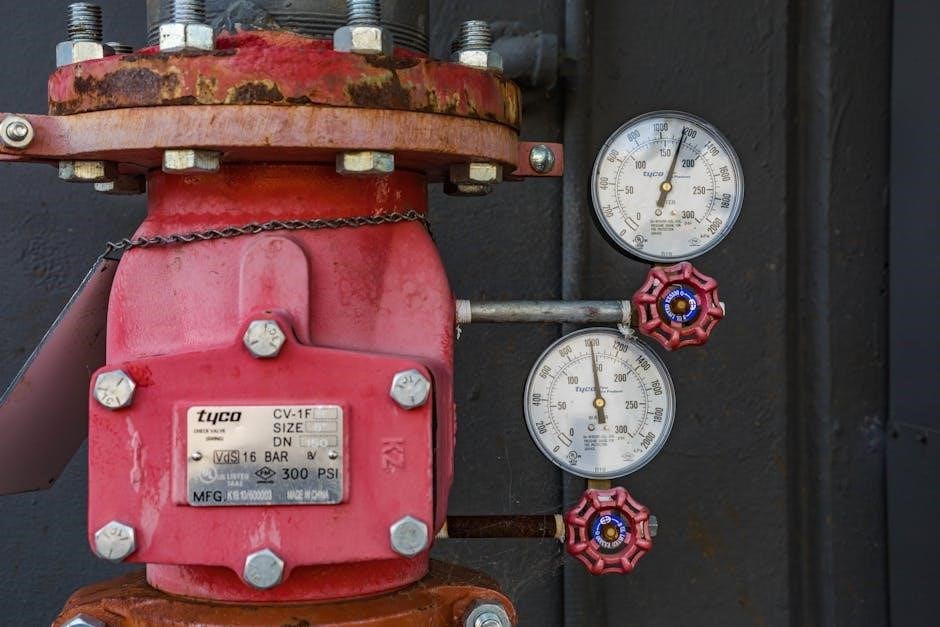
Troubleshooting Common Issues
Diagnosing problems like low/high pressure, leaks, or a dribbling relief valve is crucial for maintaining a functional Watts regulator and safe water supply.
Low Water Pressure
Experiencing low water pressure can stem from several issues within the Watts pressure regulator system. Initially, verify if the problem affects the entire house or just specific fixtures; this narrows down the source. A partially blocked water supply line, sediment buildup within the regulator itself, or a failing diaphragm are common culprits.
Inspect the adjustment screw – ensure it hasn’t been inadvertently lowered. If the regulator is old, internal components may be worn, hindering proper function. A water pressure gauge connected before and after the regulator will pinpoint if the pressure drop occurs at the regulator. Remember to check for closed valves upstream. If adjustments and inspections don’t resolve the issue, a rebuild or replacement might be necessary.
High Water Pressure
Consistently high water pressure, exceeding 80 PSI, demands immediate attention as it can damage plumbing and appliances. A malfunctioning Watts pressure regulator is often the cause. Begin by verifying the pressure with a gauge both before and after the regulator; a significant difference confirms the regulator isn’t functioning correctly.
Inspect the regulator’s adjustment screw – it might be set too high. A faulty diaphragm can also prevent proper pressure reduction. Over time, regulators can fail by over-pressuring the system. If adjustments don’t lower the pressure, consider a rebuild, focusing on the diaphragm and spring. Ignoring high pressure risks burst pipes and appliance failure, necessitating professional intervention if you’re uncomfortable with repairs.
Leaking Regulator
A leaking Watts pressure regulator signals internal component failure, often stemming from a worn diaphragm, loose connections, or a damaged regulator body. First, shut off the water supply immediately to prevent water damage. Inspect all connections for tightness; hand-tighten, then use a wrench cautiously to avoid over-tightening.
If leaks persist, the diaphragm is a likely culprit and requires replacement. A failing diaphragm prevents proper sealing, leading to drips or steady leaks. Internal corrosion can also cause leaks within the regulator body itself. If the body is compromised, replacement is generally more cost-effective than repair. Always test the repair thoroughly after reassembly, checking for any residual leaks.
Dribbling Pressure Relief Valve
A consistently dribbling pressure relief valve on your Watts regulator often indicates the regulator is failing to control downstream pressure effectively. This typically results from over-pressurization within the system, pushing the relief valve open slightly. While designed as a safety feature, constant dripping signifies a problem needing attention.
Initial checks involve verifying the outlet pressure with a gauge; it should be within the regulator’s specified range. If pressure is too high, attempt adjustment. However, frequent over-pressurization often means the regulator is nearing the end of its lifespan and requires repair or replacement. Ignoring this issue can lead to more significant system damage.
Repairing a Watts Pressure Regulator
Effective repair involves identifying the root cause – often a worn diaphragm or spring – followed by component replacement and careful pressure readjustment for optimal function.
Identifying the Problem
Accurate diagnosis is crucial before attempting any repair. Begin by observing the symptoms: low pressure throughout the house suggests a failing regulator, while fluctuating pressure indicates internal wear. A consistently dribbling pressure relief valve often signals over-pressurization, potentially due to a faulty regulator.
Utilize a water pressure gauge connected to an outdoor faucet to measure the incoming and regulated pressure. Compare readings to the regulator’s setpoint. If the outlet pressure consistently exceeds the setpoint, the regulator isn’t functioning correctly. Inspect the regulator body for visible leaks, indicating a damaged seal or housing. Remember, a complete lack of pressure might not always be the regulator’s fault; check for shut-off valves and upstream obstructions first.
Replacing the Diaphragm
Diaphragm replacement is a common repair for Watts regulators. First, shut off the water supply and relieve pressure. Carefully disassemble the regulator, noting the orientation of all parts. Gently remove the old diaphragm, inspecting it for cracks or tears – this confirms the diagnosis.
Clean the diaphragm chamber thoroughly before installing the new diaphragm, ensuring a proper seal. Lubricate the new diaphragm with potable water. Reassemble the regulator precisely as it was disassembled, tightening screws evenly. Slowly restore the water supply, checking for leaks around the regulator body. Monitor the outlet pressure with a gauge to confirm proper regulation after the repair.
Adjusting the Spring Tension
Spring tension adjustment fine-tunes outlet pressure. Locate the adjustment screw, typically under a cap on the regulator body. Loosen the locknut, then turn the screw clockwise to increase pressure and counterclockwise to decrease it. Make small adjustments – a quarter turn at a time – and monitor the outlet pressure using a pressure gauge.
Avoid over-tightening, which can damage the regulator. Once the desired pressure is achieved, securely tighten the locknut to prevent accidental changes. Regularly check the pressure to ensure stability. Proper adjustment is crucial for protecting plumbing and appliances from excessive pressure.
Cleaning the Regulator
Regular cleaning extends the life of your Watts pressure regulator. Before disassembly, shut off the water supply! Carefully remove the regulator body and inspect internal components for sediment or debris. Use a soft brush and clean water to gently remove any buildup. Avoid harsh chemicals or abrasive cleaners, as these can damage the diaphragm and other parts.
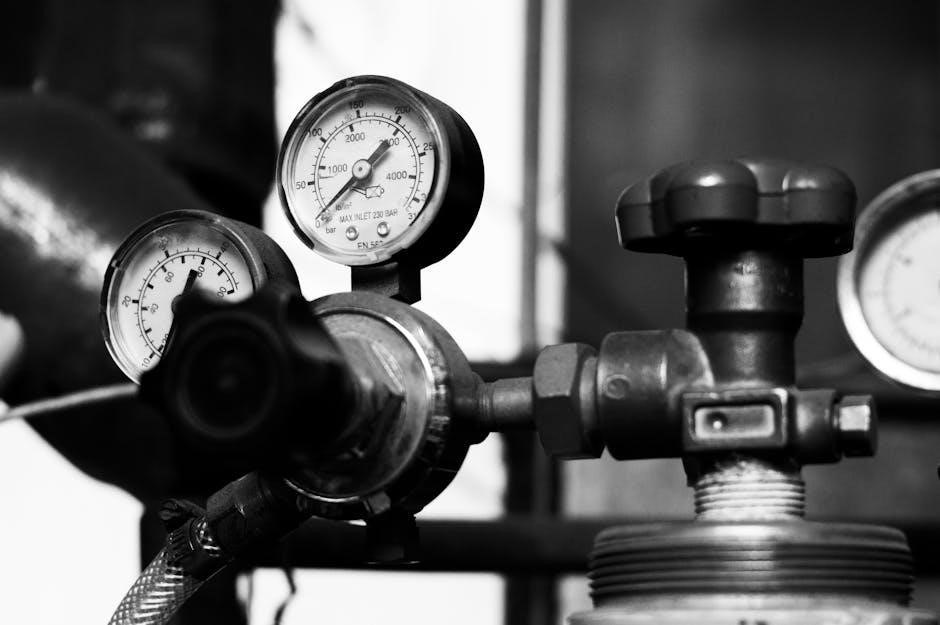
Pay close attention to the valve seats and ports, ensuring they are free from obstructions. Rinse thoroughly and allow all parts to dry completely before reassembly. Proper cleaning maintains optimal performance and prevents future issues.

Maintenance and Longevity
Consistent inspection, coupled with attention to water quality, and preventative measures, significantly extends the operational lifespan of your Watts pressure regulator.
Regular Inspection
Consistent visual checks are paramount for maintaining optimal performance. At least annually, inspect the regulator body for any signs of corrosion, physical damage, or leaks around connections. Pay close attention to the pressure relief valve; any consistent dripping indicates a potential issue requiring immediate attention.
Monitor water pressure using a gauge before and after the regulator to confirm it’s maintaining the desired output. Document these readings for comparison over time, helping to identify gradual performance declines. A proactive approach to inspection can prevent minor issues from escalating into costly repairs or system failures, ensuring a reliable and safe water supply. Remember to always shut off the water supply before any inspection or maintenance.
Water Quality Considerations
The longevity and efficient operation of your Watts pressure regulator are significantly impacted by water quality. Sediment, minerals, and debris can accumulate within the regulator, hindering diaphragm movement and causing malfunctions like reduced flow or inaccurate pressure control. Highly corrosive water can accelerate internal component deterioration, leading to leaks and eventual failure.
Consider installing a pre-filter upstream of the regulator to remove particulate matter. For areas with hard water, a water softener can minimize scale buildup. Regularly flushing the system can also help remove accumulated sediment. Addressing water quality issues proactively extends the regulator’s lifespan and maintains consistent water pressure throughout your plumbing system.

Preventative Measures
To ensure reliable performance and extend the life of your Watts pressure regulator, implement routine preventative measures. Schedule annual inspections to check for leaks, corrosion, and proper operation of the pressure relief valve. Verify the outlet pressure with a gauge to confirm it remains within the desired range.
Periodically exercise the pressure relief valve by briefly lifting it to prevent sticking. Consider a whole-house water filter to minimize sediment buildup. Addressing minor issues promptly prevents escalation into costly repairs or replacements. Consistent monitoring and proactive maintenance contribute to a stable and safe water pressure system, safeguarding your plumbing infrastructure.
Safety Precautions
Always shut off the water supply before working on the regulator; understand water pressure risks, and if unsure, seek professional assistance immediately.
Shutting Off Water Supply
Before commencing any work on the Watts pressure regulator, completely shutting off the water supply is paramount for safety and to prevent potential water damage. Locate the main water shut-off valve, typically found near the water meter or where the water line enters your home. Turn this valve clockwise until it’s fully closed.
After closing the main valve, open a faucet at the lowest point in your house to relieve any residual pressure within the pipes. This ensures a safer working environment. Double-check that no water is flowing from the faucet before proceeding. If you have a dedicated shut-off valve for the regulator itself, use that instead of the main valve for more localized control. Remember to inform household members before interrupting the water supply.
Working with Water Pressure
Understanding water pressure is crucial when dealing with Watts regulators. Excessive pressure can damage plumbing and appliances, while insufficient pressure hinders performance. A standard pressure gauge is essential for accurate readings before, during, and after regulator adjustments or repairs. Normal household water pressure typically ranges between 40 and 60 psi.
Always approach adjustments cautiously. Slowly turn the adjustment screw on the regulator, observing the pressure gauge for changes. Never exceed the maximum pressure rating of your plumbing system. If you’re unfamiliar with interpreting pressure readings or making adjustments, seeking professional assistance is highly recommended to avoid potential hazards or damage.
Professional Assistance
While many repairs are DIY-friendly, complex issues or uncertainties necessitate professional help. A licensed plumber possesses the expertise to diagnose intricate problems, ensuring accurate repairs and preventing further damage. Incorrect adjustments or repairs can lead to leaks, water damage, or even system failure.
Consider professional assistance if you encounter persistent low or high pressure, a continuously dribbling pressure relief valve, or are uncomfortable disassembling the regulator. They can also advise on appropriate regulator replacement if repair isn’t feasible. Prioritize safety and avoid risks by consulting a qualified professional for any concerns beyond your skill level.
Leave a Reply
You must be logged in to post a comment.